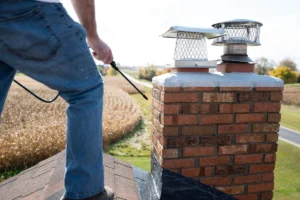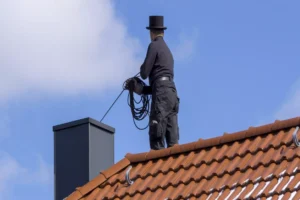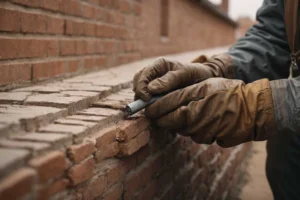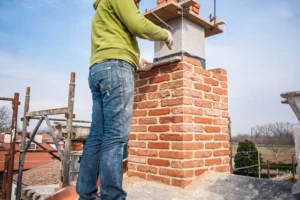
Mortar deterioration often begins as a shallow recess between otherwise sound bricks. Rain collects in the opening, and seasonal freezing gradually expands the weakened joint. For homeowners considering chimney tuckpointing in Plymouth, the central concern is the condition of surrounding masonry rather than appearance alone. Above and Beyond Chimney Service offers tuckpointing and other masonry repairs in Norfolk and Plymouth Counties. Its focus on compatible materials matters in older homes, where overly aggressive joint work can disturb original brickwork that should remain intact.
Chimney Tuckpointing in Plymouth Follows the Mortar Line
Work such as tuckpointing chimney joints removes deteriorated mortar and replaces it with suitable material while sound bricks remain in place. The depth of removal, the joint profile, and the replacement mortar must correspond to the masonry condition. If brick faces are already loose or severely damaged, joint renewal alone cannot restore them. A proper inspection separates these issues before any repair begins.
Water Resistance Depends on More Than Fresh Joints
After chimney tuckpointing in Plymouth, the chimney can still admit water through defective flashing, a damaged crown, or porous brickwork elsewhere. Coastal Massachusetts weather places additional pressure on those exposed surfaces through persistent moisture and freezing conditions. Inspection should distinguish an open mortar joint from other water pathways so that a newly finished section is not mistaken for a complete solution to every leak.
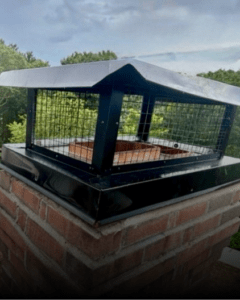
The sequence also matters. Chimney tuckpointing in Plymouth may be one part of a broader plan involving brick replacement or protective masonry treatment. Above and Beyond Chimney Service lists chimney waterproofing and chimney caps among its related offerings. Such measures have different functions; they do not replace sound mortar joints or establish that a deteriorated structure is ready for normal use without an appropriate assessment.
Tuckpointing Chimney Masonry Without Hiding the Damage
Effective tuckpointing chimney work begins with an explanation of why the joints failed. Above and Beyond Chimney Service discusses masonry color matching, yet the priority remains removal of weakened mortar and the condition of adjacent bricks. A refined finish matters only when replacement material has a suitable bond and the original defect has been addressed rather than hidden behind a surface layer.
| Visible condition | Appropriate question during inspection |
| Recessed joints | Assess depth of deterioration. |
| Loose bricks | Check for replacement. |
| White deposits | Trace moisture movement. |
| Crown cracks | Inspect separately. |
The Mistakes That Shorten the Life of a Mortar Repair
Homeowners evaluating tuckpointing chimney proposals should question work that treats all cracks as identical. Mortar needs to suit the existing brick, damaged units require separate assessment, and joint preparation must protect surrounding edges. The proposed scope should specify how much masonry is affected and identify crown or flashing defects outside the planned mortar repairs. Those distinctions matter when comparing estimates.
- Clarify how unsound mortar will be removed without damaging bricks.
- Identify damaged brickwork separately from weakened joints.
- Record crown or flashing concerns outside the mortar scope.
Mortar Repairs That Preserve Existing Brickwork
Preserving old brick begins with knowing which parts remain sound. Above and Beyond Chimney Service provides tuckpointing and brick masonry assessment, allowing a repair plan to focus on weakened joints without concealing damaged units. Its experience with South Shore chimneys supports a considered discussion of mortar compatibility, joint appearance, and the extent of the deterioration.
Continuing that care, Above and Beyond Chimney Service can inspect surrounding crown and flashing conditions before recommending separate masonry or waterproofing work. The benefit is a clearer boundary between what fresh mortar can restore and what requires a different repair. Homeowners gain a more purposeful plan for maintaining existing brickwork rather than treating every surface imperfection as structural failure.
Frequently Asked Questions
1. Can tuckpointing stop water entering mortar joints?
Sometimes. Fresh mortar addresses failed joints, but leaks from crowns or flashing need separate attention.
2. Does old mortar need to be removed first?
Yes. Deteriorated mortar must be removed before new material can bond within a prepared joint.
3. Can tuckpointing restore damaged bricks?
No. Loose or severely damaged bricks may require replacement rather than joint repair alone.
4. Will new mortar perfectly match weathered joints?
Close matching is possible, although weathering can alter the appearance of fresh and existing mortar.
5. Is white staining on brick always a mortar failure?
No. White deposits can signal moisture movement and should be investigated before assigning a cause.